
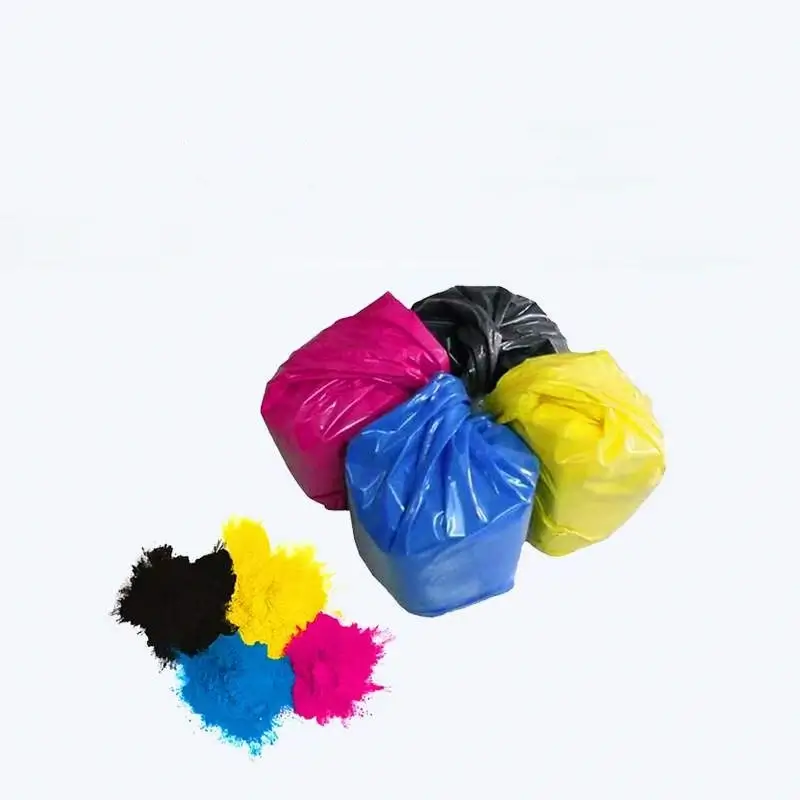
What is Chemically Produced Toner?
Chemical toner powder, also known professionally as polymerized toner, differs from traditional physically ground toner in that it is produced directly as tiny particles through chemical reactions (such as emulsion polymerization or suspension polymerization).
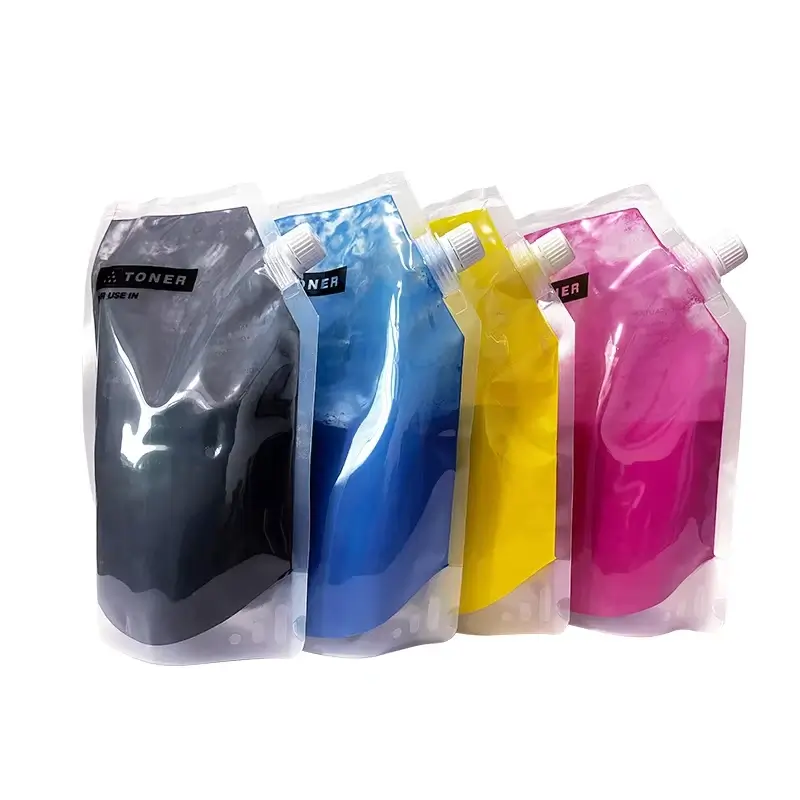
What is toner powder made of? What is the chemical composition of toner powder?
Its main components typically include the following categories, each with a specific function:
1. Resin (Resin / Polymer Binder)
• Content: Approximately 80% – 90%
• Common types: Styrene-Acrylate Copolymer or Polyester Resin.
• Function: This is the “skeleton” of the toner. It encapsulates other components and determines the toner’s melting point, softening point, and fixing strength on paper. The resin particles in chemical toner are typically very rounded and uniform, resulting in higher printing resolution.
2. Pigment/Colorant
• Content: Approximately 5% – 10%
• Common Types:
• Black: Carbon Black.
• Color: Organic pigments (such as specific chemical pigments for Cyan, Magenta, and Yellow).
• Function: Provides color. In chemical toners, pigment particles are more evenly dispersed within the resin, resulting in more vibrant colors and a wider color gamut.
3. Wax/Release Agent
• Content: Approximately 3% – 10%
• Common Types: Polypropylene wax, polyethylene wax, or carnauba wax, etc.
• Function: During the fixing process, the wax melts and penetrates the toner surface, acting as a lubricant to prevent the molten toner from sticking to the fuser roller (i.e., preventing “non-release” or “paper jams”), thus achieving oil-free fixing.
4. Charge Control Agent (CCA)
• Content: Approximately 1% – 2%
• Common Types: Metal complexes, quaternary ammonium salts, etc.
• Function: Adjusts the charge and polarity (positive or negative) of toner particles, ensuring accurate adsorption of toner onto the electrostatic latent image of the photoconductor drum.
5. External Additives
• Content: Small amount (usually coating the particle surface)
• Common Types: Fumed silica, titanium dioxide, and other nanoparticles.
• Function:
• Flowability: Adheres to the toner surface like a ball bearing, preventing toner clumping and increasing flowability.
• Grinding/Cleaning: Helps clean residual toner from the surface of the photoconductor drum.
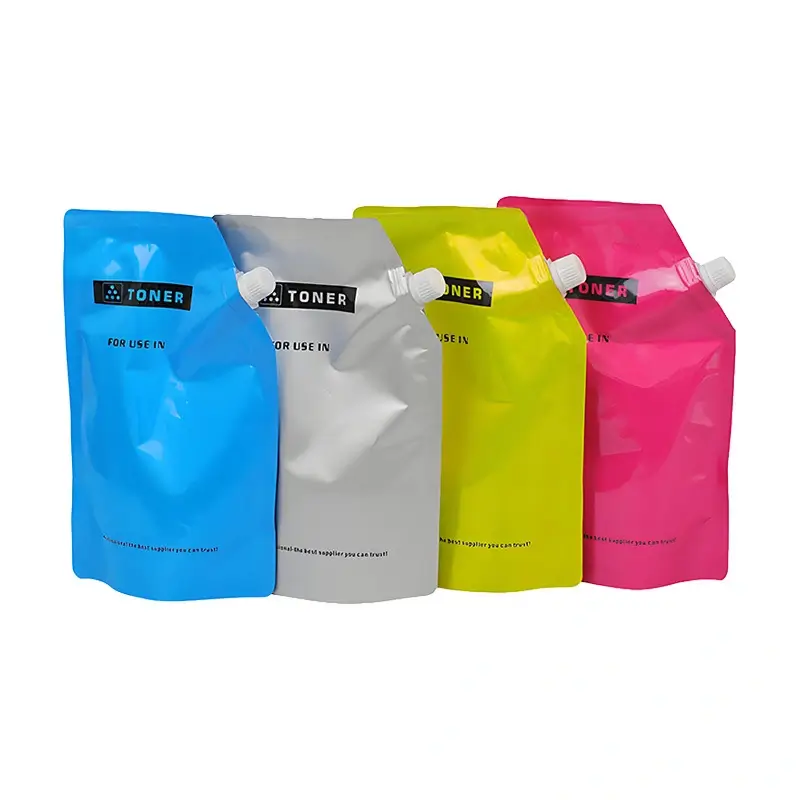
Refill Toner Powder
Summary: Chemical Toner Powder vs. Traditional Toner
Difference between Chemical and Physical Toner Powder:
While their chemical composition lists are similar, their physical structures differ significantly.
• Chemical Toner Powder: The particles are spherical and extremely uniform in size. This results in better flowability, a thinner fixing layer (saving toner), and sharper printed lines.
• Physical Toner Powder: The particles are irregular lumps (like gravel), with a rough surface that can easily wear down machine parts.
Since you’re looking at high-end production equipment like the Konica Minolta, which typically uses chemical toner (Simitri HD/HD+ series) because its wax-based technology and low-melting-point polyester resin are suitable for high-speed printing and a wide range of paper media.

Leave A Comment