
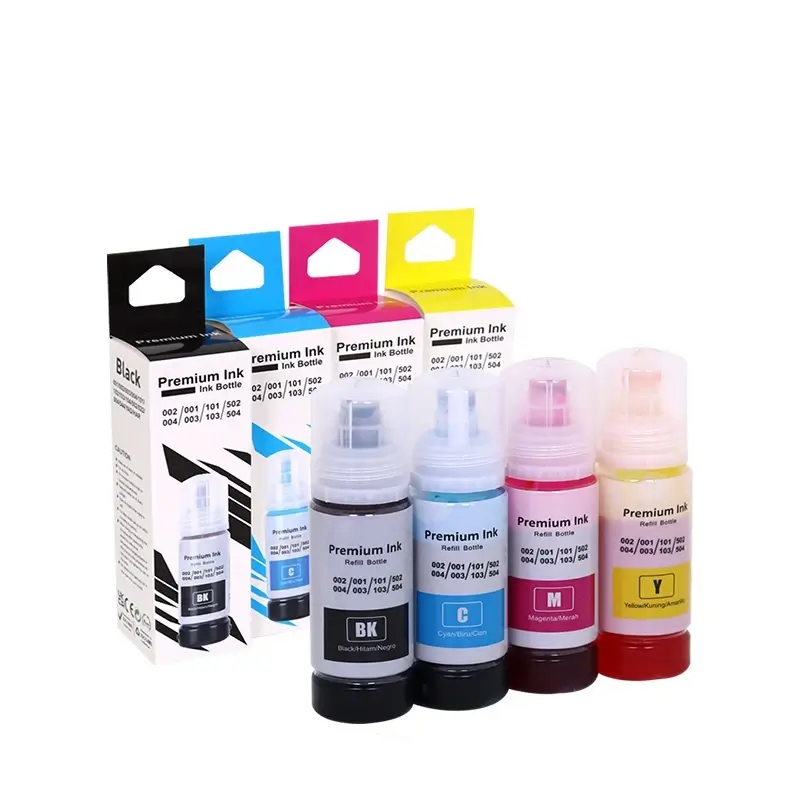
What is Sublimation Ink? The Ultimate Guide to Characteristics & Principles
Executive Summary: Sublimation ink is a specialized digital printing consumable that transforms from a solid to a gas under heat (180°C – 220°C) to bond permanently with polyester fibers or polymer-coated substrates. Unlike traditional inks, it creates a “seamless” finish that is scratch-resistant and ultra-durable.
Core Characteristics: Why Choose Sublimation Ink?
- Permanent Bonding (Molecular Level): The dye penetrates the material’s surface rather than sitting on top, ensuring the print never cracks, peels, or washes off.
- High-Definition Color Gamut: Supports resolutions over 1440 dpi, delivering photographic-quality saturation and smooth gradients for skin tones and landscapes.
- Eco-Friendly & Safe: Premium inks are free from formaldehyde and heavy metals, meeting EU REACH and US FDA standards for apparel and food-contact items (e.g., mugs).
- Extreme Durability: Superior resistance to abrasion, UV fading, and high-frequency washing.
How Does Sublimation Ink Work? (The 3-Step Process)
Sublimation printing relies on a chemical “phase change” to achieve permanent color fixation.
- Digital Output (Printing): Designs are printed onto Sublimation Transfer Paper using a piezoelectric inkjet printer (e.g., Epson L805). Note: Patterns must be printed in “Mirror Image”.
- Thermal Sublimation (Reaction): The paper is pressed against the target material at 180°C – 220°C under 3-8 kg/cm² of pressure. The solid dye turns directly into a gas.
- Penetration & Solidification: The gaseous dye enters the opened molecular gaps of the polyester/coating. Once cooled, the gaps close, trapping the solid dye inside the material fibers.
Compatibility & Material Requirements
Sublimation ink requires polymer-based or pre-coated surfaces to bond effectively.
| Material Type | Examples | Requirement |
|---|---|---|
| Synthetic Fibers | Sportswear, Yoga Pants, Polyester | Minimum 60% Polyester content |
| Coated Hard Goods | Mugs, Medals, Ceramic Tiles | Must have a Polymer Coating |
| Plastics/Electronics | Phone Cases, ABS/PC Toys | Thermal stability is required |
| Natural Fibers | Cotton, Wood, Bare Metal | Thermal stability is required |
Pro-Tips for Maximum Print Quality
- Equipment Maintenance: Print a test page weekly to prevent the printhead from clogging due to dried dye particles.
- Storage Conditions: Store in a cool, dry place below 30°C. Avoid direct sunlight to prevent chemical instability.
- Color Management: Always design in CMYK mode. Converting RGB to CMYK at the last minute can cause significant color shifts during the heat transfer process.
- The “Shake” Rule: Gently agitate bulk ink containers before refilling to ensure even dye distribution.
Application Scenarios
- Apparel: Personalized jerseys, trendy hoodies, and high-performance activewear.
- Home Décor: Custom tile murals, glass art, and decorative home textiles.
- Promotional Gifts: Branded mugs, phone cases, and corporate awards.
- Industrial: Automotive interiors and electronic housing customization.
Technical Meta Tags:
- Primary Category: Digital Printing Supplies / Industrial Chemistry
- Key Technology: Piezoelectric Inkjet / Thermal Transfer
- Process Parameters: 180°C – 220°C / 10 – 60 Seconds
- Keywords: Sublimation Ink vs Dye Ink, Dye-Sub Printing Process, Polyester Printing Guide, Heat Transfer Consumables.

Leave A Comment