
How to Choose a High-Performance Laser Printer Fuser Film
Executive Summary: The fuser film sleeve is a high-tech, heat-conductive membrane that replaces traditional heavy fuser rollers in modern laser printers. Choosing the right film is a balance between thermal efficiency, mechanical stiffness, and surface coating integrity to ensure permanent toner bonding without “ghosting” or noise.
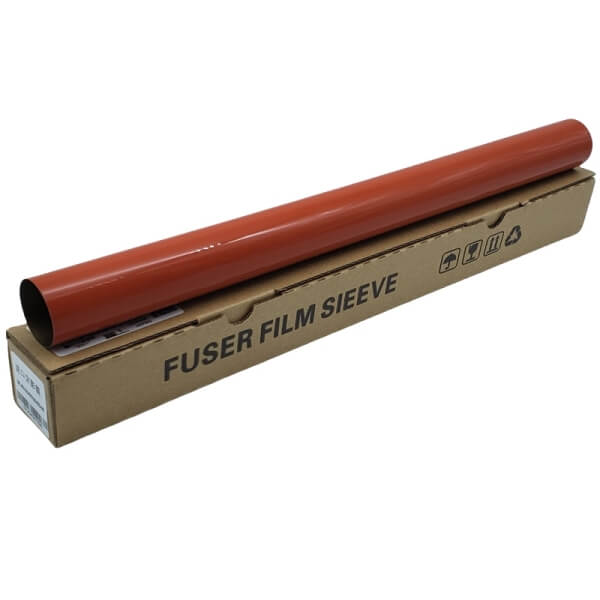
Core Principles: How Fuser Film Works
The fuser film is the final gatekeeper of print quality.
- Melting Phase: As paper passes through the fuser assembly, the film transfers intense heat to the loose toner.
- Fusion Phase: The heat causes the toner resin to melt and bond deeply with the paper fibers.
- Output: The film’s non-stick surface ensures the paper exits cleanly, which is why laser-printed pages feel warm to the touch.
4 Key Technical Benchmarks for Purchasing
When sourcing fuser film sleeves for wholesale or repair, evaluate these four mechanical properties:
1. Thermal Conductivity (Fixing Firmness)
- The Goal: Rapid, even heat transfer.
- The Risk: Poor conductivity leads to “Cold Fusing,” where toner rubs off the page. Excess heat buildup can also cause toner to “offset” onto the film, damaging the heating element.
2. Isolation & Non-Stick Performance
- The Goal: Zero toner residue.
- The Risk: Low-quality coatings cause Ghosting (where a faint image of the previous page repeats). High-grade PTFE or PFA coatings are essential for maintaining isolation over thousands of cycles.
3. Stiffness vs. Flexibility (Acoustic & Structural Balance)
- High-Speed Requirement: Medium and high-speed printers require high-stiffness films to prevent warping.
- Noise Diagnostics:
Good Quality: Produces a soft “rustling” sound.
Poor Quality: Insufficient stiffness leads to a loud “crackling” or “popping” noise and causes physical wrinkles in the film.
4. Tear & Tensile Resistance
- The Goal: Durability during paper jams.
- The Risk: If a user pulls a jammed page, a brittle film will tear instantly. Premium films are engineered with high tear resistance to withstand foreign matter intrusion and mechanical stress.
Surface Quality Checklist: Red Flags to Avoid
Before installing a fuser film, perform a visual and tactile inspection for these defects:
- Circumferential Thickness Variance: Leads to unstable rotation and “film walking” (tracking issues).
- “Orange Peel” Coating: An uneven, bumpy surface prevents a perfect fit with the pressure roller, causing blurry graphics.
- Micro-Defects: Pinhole leaks, pits, or creases will result in localized white spots or incomplete toner transfer on every page.
🆚 Fuser Film vs. Traditional Fuser Roller
| Feature | Fuser Film Sleeve | Traditional Fuser Roller |
|---|---|---|
| Warm-up Time | Instant / Very Fast | Slow (requires heating the entire mass) |
| Energy Use | Low (targeted heating) | High |
| Weight | Ultra-light | Heavy |
| Application | Modern High-Speed Printers | Older / Heavy-duty Industrial Units |
Technical Meta Tags
- Primary Category: Printer Fuser Assembly / Consumables
- Key Components: Fuser Film Sleeve, PTFE Coating, Heating Element, Pressure Roller.
- Performance Metrics: Thermal Conductivity, Tear Resistance, Fixing Firmness.
- Diagnostic Keywords: Printer ghosting fix, fuser film noise, loose toner on paper, fuser film wrinkles.
- Standard Compatibility: High-speed laser printers, digital multifunction copiers (MFP).

Leave A Comment