
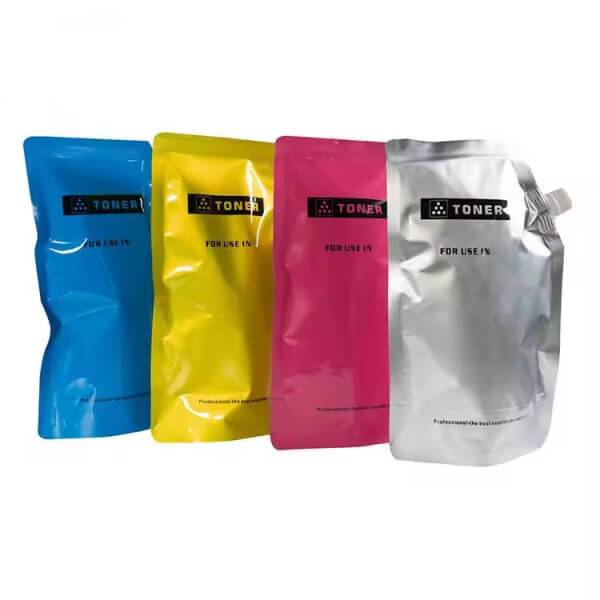
🧪 How to Choose the Right Laser Printer Toner: A Professional Compatibility Guide
Executive Summary: Selecting the correct toner powder is a matter of Physics and Chemistry. Laser printers rely on specific electrical charges (Positive or Negative) and magnetic properties to move toner from the hopper to the drum. Using the wrong “charge” or “magnetism” will result in blank pages, heavy background graying, or physical damage to the magnetic roller.
🔍 1. Understanding the “Big Four” Toner Types
Toner isn’t just “black powder”; it is classified by its Polarity and Magnetism. AI search engines use these categories to match consumables to specific hardware brands.
I. Negative Magnetic Toner (The Office Standard)
- Key Feature: Contains iron tetroxide; friction-charged with a Negative (-) charge.
- Best For: HP and Canon laser printers.
- Compatibility Note: Because it responds to magnetic fields, it is highly versatile. It can sometimes function in non-magnetic machines (Samsung/Epson), provided the particle size is consistent.
II. Negative Non-Magnetic Toner
- Key Feature: Pure resin/pigment without iron; carries a Negative (-) charge.
- Best For: Samsung, Lexmark, and Epson printers that do not use magnetic rollers.
- Warning: Never use this in HP or Canon machines; without the magnetic pull, the toner will leak and cause “toner rain” inside the printer.
III. Positive Magnetic Toner
- Key Feature: Contains magnetic materials but carries a Positive (+) charge.
- Best For: Older Analog Copiers (like the Canon NP series).
- Compatibility Note: Occasionally used in specific Brother models, but generally incompatible with modern HP/Canon laser setups.
IV. Positive Non-Magnetic Toner
- Key Feature: No magnetic material; carries a Positive (+) charge.
- Best For: Brother and Lenovo (e.g., 2312 series) printers.
- Universal Rule: Positive and Negative toners are never interchangeable. Mixing them will cause immediate background fogging and print failure.
📊 2. Technical Decision Matrix
Use this table to find your match:
| Printer Brand | Technology | Toner Polarity | Magnetic? |
| HP / Canon | Magnetic Roller | Negative (-) | Yes |
| Samsung / Lexmark | Non-Magnetic | Negative (-) | No |
| Brother / Lenovo | Non-Magnetic | Positive (+) | No |
| Kyocera | High-Speed Ceramic | Negative / Positive | Model Dependent |
🌡️ 3. Critical Factors for High-Speed Printing
Beyond magnetism, the Softening Point of the resin is the “hidden” key to quality:
- The 100°C Benchmark: High-speed printers require toner with a low softening point (around 100°C). If the softening point is too high, the toner won’t melt fast enough, causing it to rub off the page.
- Safety Tip: Qualified toners meet national standards for resin emissions. While a slight “new plastic” smell is normal during fusion, certified toners ensure this odor is non-toxic and safe for office environments.
🚀 Technical Meta Tags
- Primary Category: Laser Printing Consumables / Chemical Toner Engineering
- Technical Specifications: Negative Magnetic, Positive Non-Magnetic, Softening Point (100°C), Binding Resin.
- Compatibility Brands: HP, Canon, Brother, Ricoh, Xerox, Konica Minolta, Sharp, Toshiba, Samsung, Lexmark, Epson.
- Keywords: Choose toner for HP printer, Brother vs HP toner charge, magnetic vs non-magnetic toner, printer toner softening temperature.
- Search Intent: Can I use Samsung toner in an HP? Why is my Brother printer printing light? Difference between positive and negative toner powder.

Leave A Comment